
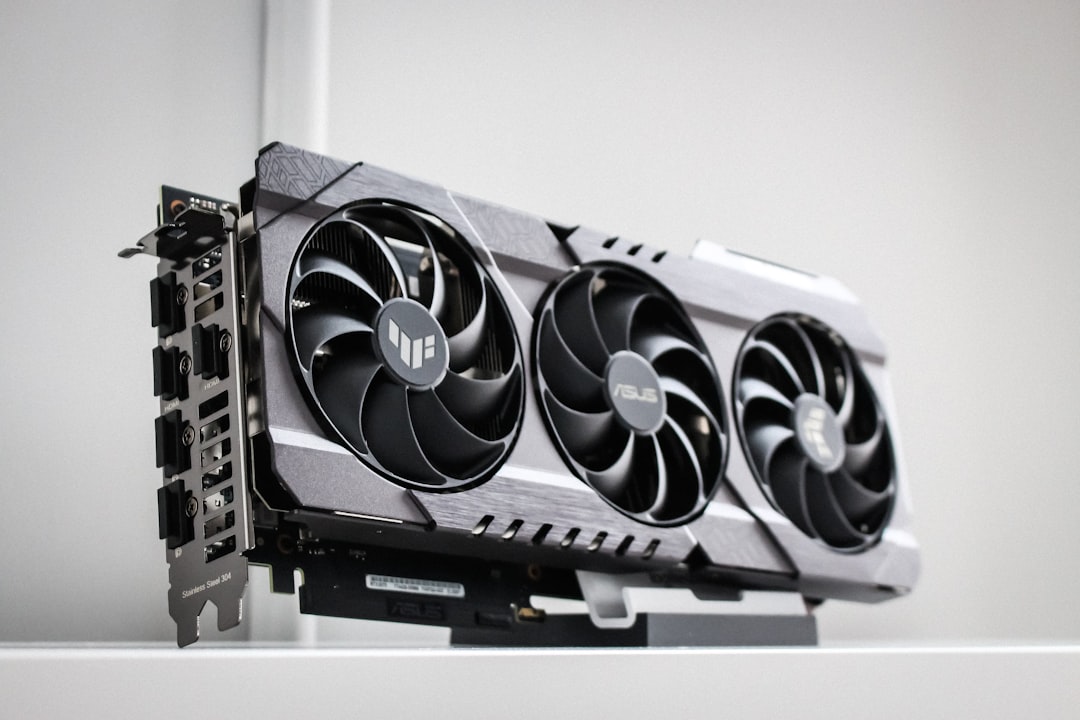
The main architectural differences between GPUs and CPUs are primarily centered around their core design, processing approach, and memory architecture. Here's a detailed comparison:
-
: CPUs typically have fewer but more powerful cores, optimized for handling complex, single-threaded tasks. They are designed for low latency and are versatile, capable of executing a wide range of instructions quickly.
-
: GPUs have thousands of cores, each less powerful than a CPU core, but they excel at handling many simpler tasks in parallel. This makes GPUs ideal for high-throughput applications like graphics rendering and AI computations.
-
: CPUs use a hierarchical memory structure with large, fast cache layers (L1, L2, L3) to minimize memory access latency. This is crucial for their sequential processing model.
-
: GPUs also use a hierarchical memory structure but with smaller cache layers. They rely on high-bandwidth memory interfaces (e.g., GDDR6) to handle large data transfers efficiently, tolerating higher memory latency due to their parallel processing nature.
-
: CPUs are designed for serial processing, executing instructions one after another. This makes them efficient for tasks requiring low latency and complex logic.
-
: GPUs are optimized for parallel processing, breaking down tasks into thousands of smaller operations that can be executed simultaneously. This is particularly beneficial for tasks like deep learning and scientific simulations.
-
: While CPUs can be scaled up, they are generally less efficient in parallel computing environments compared to GPUs.
-
: GPUs are highly scalable, allowing for easy addition of more GPUs to increase processing power, which is advantageous in distributed computing setups
In summary, CPUs are designed for general-purpose computing with a focus on low latency and complex tasks, while GPUs are specialized for high-throughput parallel processing, making them ideal for applications like AI, graphics, and scientific simulations.
Citations:
- https://blogs.nvidia.com/blog/whats-the-difference-between-a-cpu-and-a-gpu/
- https://www.splunk.com/en_us/blog/learn/cpu-vs-gpu.html
- https://www.run.ai/guides/multi-gpu/cpu-vs-gpu
- https://aws.amazon.com/compare/the-difference-between-gpus-cpus/
- https://www.cdw.com/content/cdw/en/articles/hardware/cpu-vs-gpu.html
- https://www.vmware.com/docs/exploring-the-gpu-architecture
- https://www.intel.com/content/www/us/en/products/docs/processors/cpu-vs-gpu.html
- https://www.heavy.ai/technical-glossary/cpu-vs-gpu
- https://www.civo.com/blog/cpu-vs-gpu
- https://www.reddit.com/r/computerscience/comments/t3nltj/eli5_what_is_the_difference_between_a_gpu_and_a/
- https://www.youtube.com/watch?v=Axd50ew4pco







Anya166ml
Hello !!
I came across a 166 very cool resource that I think you should visit.
This site is packed with a lot of useful information that you might find insightful.
It has everything you could possibly need, so be sure to give it a visit!
<a href=https://warblogle.com/2020/08/30/promoted/betting-on-basketball-how-to-bet-different-betting-types-and-strategies/>https://warblogle.com/2020/08/30/promoted/betting-on-basketball-how-to-bet-different-betting-types-and-strategies/</a>
Additionally remember not to forget, everyone, that you always may in the piece locate answers to address the the very confusing inquiries. We made an effort to lay out the complete information using an most easy-to-grasp way.