

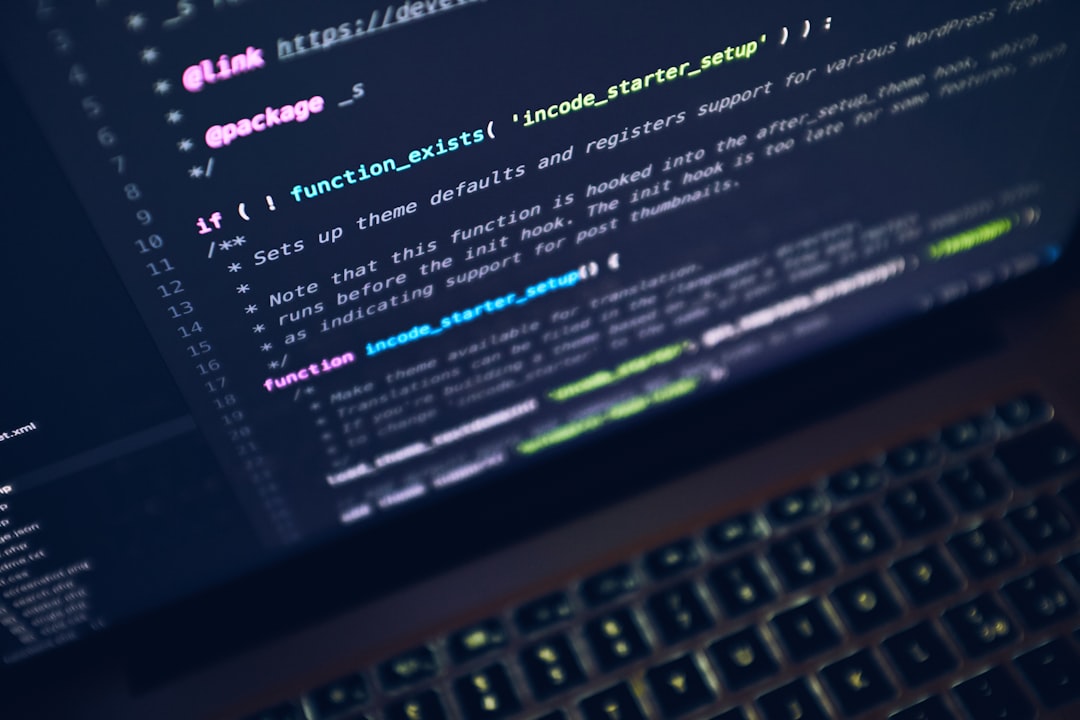
Vibe coding—a term popularized in 2025—refers to a programming approach where developers rely on large language models (LLMs) to generate software from natural language prompts, often without deeply reviewing or manually writing the underlying code themselves.
This “flow-first” style of coding is increasingly visible across tech communities and tools, but it’s becoming clear that its suitability depends heavily on context, purpose, and risk tolerance. Below, we explore why many professionals remain skeptical about vibe coding for critical systems, yet why it’s capturing the imagination of game developers.
What Is Vibe Coding?
At its core, vibe coding shifts the programmer’s role from manually typing code to guiding, testing, and iterating via prompts to AI coding agents. Instead of writing functions and classes, developers describe desired behavior and refine outputs through conversation with the AI model.
Proponents liken it to creative rapid prototyping—where experimentation and iteration precede deep engineering discipline. Yet, that very freedom is part of why critics urge caution.
Why Professionals Are Skeptical in Critical Systems
1. Reliability and Predictability Concerns
In environments where failure isn’t an option—like aerospace, medical devices, automotive safety systems, or banking infrastructure—software must be robust, auditable, and deterministic. Vibe coding, which prioritizes rapid output over structured design, often produces unpredictable behavior that is hard to verify.
Traditional engineering disciplines emphasize formal design, precise specifications, and stringent testing—practices that vibe coding, by definition, tends to sidestep.
2. Security Risks
AI-generated code has been shown to contain security vulnerabilities at high rates, with many implementations missing crucial safeguards like input validation or secure authentication.
Security benchmarks on real coding tasks found that while many AI outputs may work functionally, only a small fraction meet basic security standards—raising alarms for systems where breaches have serious consequences.
3. Lack of Understandability and Maintainability
Vibe coding often produces code that developers did not write themselves and may not fully understand, complicating debugging, documentation, and long-term maintenance.
For mission-critical systems, this lack of clarity can translate directly into operational risk. In industries like aviation or healthcare, engineers must be able to demonstrate exactly how and why a system behaves a certain way—something vibe coding inherently undermines.
4. Professional Engineering Standards
Skillful engineers operate within certification standards, safety audits, and compliance frameworks. Vibe coding’s freeform outputs don’t easily align with these rigorous standards.
Even leading figures in software, like Linus Torvalds, have drawn a line between experimental use and serious engineering, noting AI tools might help beginners or non-critical tasks but should not form the backbone of essential software.
Where Vibe Coding Excels: Game Development and Creative Prototyping
1. Rapid Prototyping and Iteration
In game development, particularly in early stages, the ability to quickly prototype environments, mechanics, UI elements, or scripts can be transformative. Teams can use vibe coding to iterate on ideas fast, adjusting gameplay loops or visuals without deep investment in traditional code.
This rapid flow aligns well with game design workflows, where feel and experience are explored before final technical rigor is applied.
2. Lower Stakes, Higher Creativity
Games often tolerate frequent changes and even bugs during development; what matters most in early builds is creative exploration and player engagement. Vibe coding allows designers and developers to feel their way through prototypes, embracing creative momentum over formal engineering constraints.
3. Democratizing Game Creation
Because vibe coding abstracts away much of the syntax and technical overhead, non-programmers or smaller indie teams can produce playable prototypes or whole game concepts without large teams or specialized developers. This democratization expands who can participate in game creation.
4. Enhancing, Not Replacing, Traditional Skills
For experienced game developers, vibe coding serves as an augmentation tool—handling boilerplate, scaffolding, or minor logic while humans focus on game design, story, and optimization.
In this context, vibe coding doesn’t replace engineering discipline; it complements creativity and helps maintain developer flow.
A Balanced View: Not Black and White
The divide isn’t a simple good vs. bad. Instead, vibe coding highlights an emerging continuum:
- At one end, strict engineering disciplines hold firm in critical systems with high reliability needs.
- At the other, creative fields like game development benefit from rapid iteration and experimental code generation.
For many organizations, the key lies in combining vibe coding with engineering oversight: using it for creative prototyping or early design, then applying traditional development rigor before production deployment.
Conclusion
Vibe coding represents a new paradigm in software creation, driven by powerful AI tools. Yet the same qualities that make it revolutionary—speed, intuitiveness, and low entry barriers—also make it unsuitable for systems where correctness, security, and accountability are paramount.
Conversely, in creative and dynamic domains like game development, vibe coding offers a powerful way to experiment, prototype, and bring imaginative ideas to life quickly.
Understanding where vibe coding fits—and where it doesn’t—is essential for leveraging its strengths without compromising on core engineering values.


0 Comments