
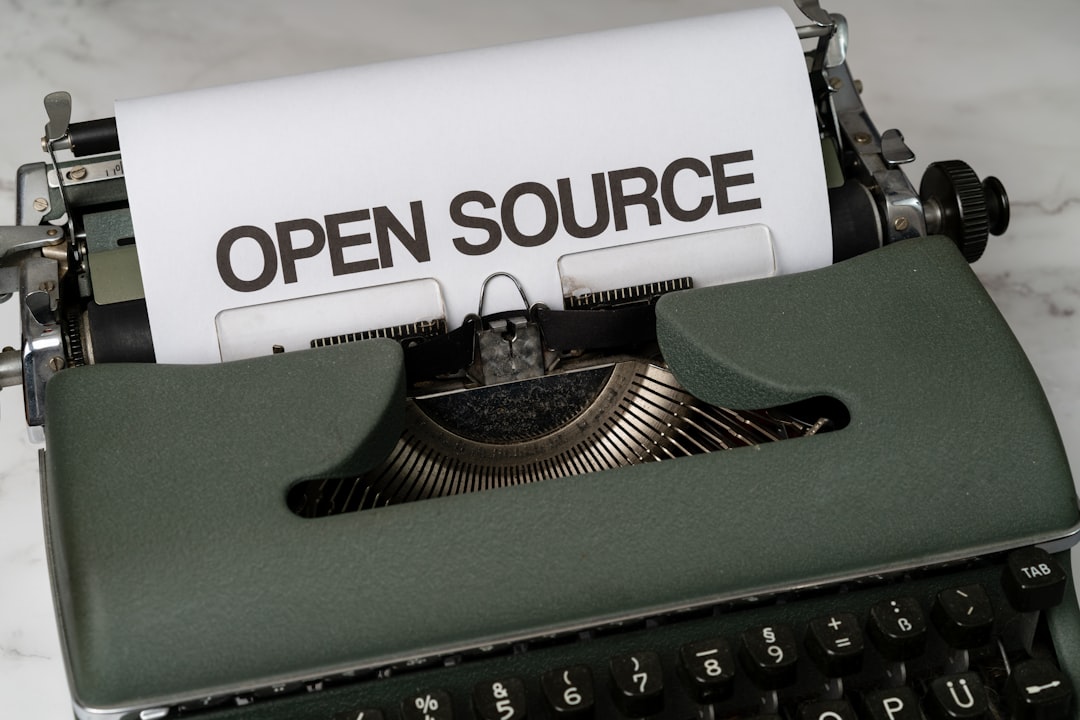
In the late 1990s, the "Open Source" revolution was driven by a simple economic reality: code was expensive to write but cheap to copy. Today, we are standing on the precipice of a new era where Agentic AI—systems that can plan, code, and execute tasks autonomously—is pushing the marginal cost of writing code toward zero.
This shift begs a critical question: If an AI agent can generate a custom software solution for you in seconds, do we still need the shared commons of Open Source?
The answer is yes, but the reason is changing. We are moving from an era where we open-source code to share effort, to an era where we open-source context to share control.
The Traditional bargain: Why We Open Source
To understand the future, we must look at the incentives that built the current ecosystem.
For Individuals:
- Reputation & Portfolio: A GitHub profile is the modern resume.
- "Scratching an Itch": You fix a bug because you need it fixed, and share it so others don't have to.
- Learning: Reading high-quality code is the fastest way to upskill.
For Organizations:
- Commoditizing Complements: Companies open-source the "plumbing" (like Kubernetes or React) to sell the "value" (cloud hosting or enterprise services).
- Hiring Pipeline: It acts as a filter for top talent.
- Standardization: If everyone uses your standard, you control the ecosystem (e.g., TensorFlow vs. PyTorch).
The Agentic Disruption
Agentic AI challenges these traditional incentives in two distinct ways:
1. The "Local Fix" Paradox
In a traditional workflow, if you find a bug in a library, the "cost" of fixing it locally vs. submitting a Pull Request (PR) is comparable. You might as well submit the PR to get community credit.
With Agentic AI, the agent can patch the library locally for your specific context in milliseconds. You no longer need to wait for a maintainer to merge your PR. The friction of contributing back to the community might suddenly outweigh the benefit of just moving on. Result: A potential fragmentation where everyone runs "custom" versions of software, and the upstream repository starves.
2. The Devaluation of "Boilerplate"
Much of open source is utility code—libraries that do mundane tasks (date formatting, API wrappers). If an agent can write this code instantly, the value of maintaining a shared library for it drops. Why import a dependency when your agent can just "write the function" into your codebase directly?
The New Frontier: Why Open Source Will Survive (and Thrive)
Despite these risks, the rise of Agentic AI is actually triggering a new wave of open source, focused not on algorithms, but on interoperability.
1. The Rise of "Agent Standards" (AAIF)
Just as the Linux Foundation shepherded the OS era, we are seeing the formation of bodies like the Agentic AI Foundation (AAIF). Major players (Anthropic, OpenAI, Block) are uniting to create open standards because agents must be able to talk to each other.
- The Problem: If every agent speaks a different language, they can't collaborate.
- The Solution: Open protocols. If proprietary agents are "walled gardens," they are useless. An agent that can only use Google tools is less valuable than one that can use any tool via an open standard.
2. AGENTS.md: The New README
We are already seeing the emergence of new open-source artifacts. Over 60,000 repositories have adopted AGENTS.md, a standardized markdown file that acts as a "README for robots."
- What it is: A file at the root of a project that tells an AI agent how the project is structured, what the coding style is, and how to run tests.
- Why it matters: This is open source. It's developers sharing the "context" required to make agents effective. We aren't just sharing code anymore; we are sharing the instructions for how to manipulate that code.
3. The Model Context Protocol (MCP)
Perhaps the most important open-source development of 2025 is the Model Context Protocol (MCP). It solves a massive problem: how do you connect an AI to a database, a GitHub repo, or a Slack channel without writing custom code for every single integration?
MCP is an open standard that lets developers build a "connector" once (e.g., a "Google Drive MCP Server") that any agent can use. This is the classic "Commoditize the Complement" strategy in action: AI companies need a rich ecosystem of tools for their models to be useful, so they are incentivized to keep the protocol open.
Conclusion: From "Open Code" to "Open Trust"
Will Agentic AI result in less open-source software?
- Yes, in the sense that we will likely see fewer small, utility libraries. The "left-pad" era of micro-packages may end as agents generate that utility logic on the fly.
- No, in the sense that the infrastructure of agency must be open.
The value of Open Source is shifting from "saving time" (by reusing code) to "ensuring trust." When an agent is booking flights or deploying servers for you, you need to verify its instructions. You cannot trust a "black box" agent with your infrastructure.
The future of Open Source isn't just about humans reading code; it's about humans writing the standards that allow agents to serve us safely. The code may be generated, but the governance must remain open.





EmailBombEn
<a href=https://t.me/Flood_Service>спам программа</a>
(Info Email bomber https://t.me/flood_service/465 )
Email Bombing - email flood or email hoax (DOS attack) or cluster email bombing, what are they actually doing?
A huge number of emails are sent to e-mail. This usually means that the @Flood_email_bot specifically targets the victim's mailbox associated with your email.
These emails are intended to make fun of friends or distract the victim from any security messages or other emails.
I am glad to present you a mail flood bot with a convenient menu and flexible settings!
The cost of the service is $ 1 = 1000 letters.
You specify the time of the flood and the number of letters yourself, or choose the "FAST FLOOD" function
During the flood, a sufficient number of letters arrive so that the owner would miss an important letter!
The bot will flood more than you ordered. On average, 30% more than ordered.
FLOOD EMAIL | EMAIL SPAM FLOOD GMAIL | ALL EMAIL FLOOD | ФЛУД ПОЧТ | Бот по флуду почт | Спам почт | spam mail | email flooder | Поставить флуд на почту | Топовый флудер почт | Флуд емаилов | Новый телеграм бот по флуду почт
Flood email, Floods Email, Email flooding, gmail flood, email bomber, flood hotmail, flood online,email flooding, email flood bot, email flooded with spam, email flooding service, email flooded with subscriptions, email flooder bot, email bomber 2023, email bomber 2024, email spam bot online, email spammer bot free, spam bot, бот по флуду почт, сервис по флуду почт, услуги по флуду, флуд услуги.
@Flood_email_bot - Лучший емаил бомбер на рынке!