
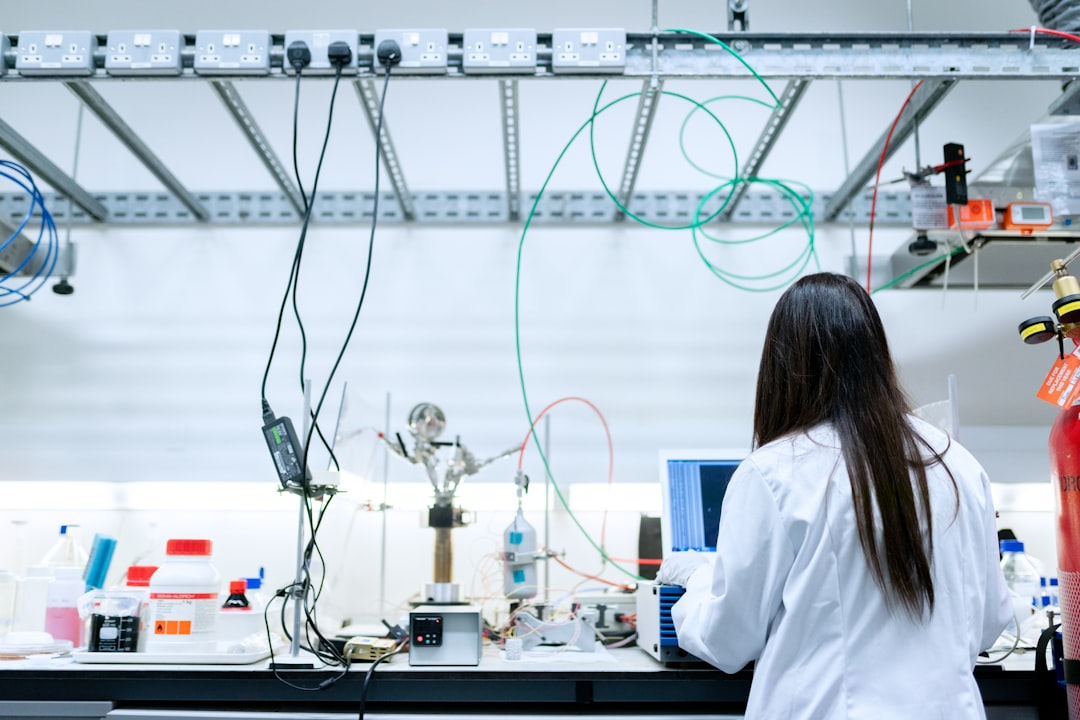
The development of human researchers represents one of the most costly and time-consuming investments in the modern knowledge economy, yet paradoxically, scientific advancement continues to be hindered by severe researcher shortages. This critical challenge is reshaping how institutions, governments, and organizations approach scientific discovery—and artificial intelligence is offering transformative solutions.
The Staggering Cost of Creating a Researcher
Developing a researcher requires an extraordinary financial commitment that extends far beyond tuition fees. The total cost of PhD training varies significantly by geography and discipline, but the figures are consistently staggering. In the United States, a doctoral degree costs approximately $49,500 per year, with students typically requiring 5.7 years to complete their degrees. This translates to a total investment of approximately $280,000–$396,000 per researcher.

Total cost of PhD research training varies significantly across countries, ranging from approximately $140,000 to $307,000, with the United States averaging $49,500 annually
The investment extends globally. Australia averages $33,788 per year across research training programs, while in the United Kingdom, a single PhD is priced at a minimum of £140,000 (approximately $175,000) for four years of study. In Iran, medical student training alone costs approximately $61,493 per year. When biomedical researchers complete their doctoral training, the annual cost nationally reaches approximately $2.2 billion for training new biomedical PhDs, with average costs of about $51,000 per year including tuition, fees, and living expenses.
This financial burden extends beyond the direct costs of education. Researchers pursuing clinical paths face additional challenges. For physicians who pursue PhD training, the opportunity cost reaches $264,854 for four years of PhD study, rising to $357,065 after an additional two years of postdoctoral training. These calculations account for foregone clinical earnings—a sacrifice that many promising researchers cannot afford.
Research year costs during medical school alone range from $32,112 to $73,649, with variation depending on geographic location and institution type.
A Decades-Long Investment with Uncertain Returns
The timeline for researcher development is equally daunting. On average, it takes eight years to complete requirements for an MD-PhD dual-degree program, and these timelines are lengthening rather than shortening. The number of individuals taking gaps between college and professional school has risen from 53% in 2013 to 75% in 2020, primarily to improve research credentials—yet these gaps do not demonstrate associated benefits with faster time to degree. Moreover, many PhD candidates who begin their training do not complete it. The attrition from doctoral programs represents both a human and financial tragedy, with costs borne by funding agencies, institutions, and the researchers themselves.
The Human Limitations Problem: Why Researchers Cannot Solve Everything
Beyond the financial costs, human researchers face fundamental cognitive and practical limitations that constrain scientific progress. These limitations are well-documented in cognitive science and organizational research: limited time, limited computational capacity, and limited communication collectively restrict what individual researchers can accomplish.
The human mind's problem-solving abilities are constrained by functional fixedness—the inability to perceive solutions outside traditional thinking patterns—and by the cognitive biases that emerge under stress and pressure. Complex problem-solving becomes exponentially more difficult as problems scale, requiring not just individual brilliance but entire teams, extensive resources, and years of dedicated effort.
Research is inherently repetitive. The same experimental methods are performed thousands of times. The same analytical procedures are conducted across institutions. This massive duplication of effort consumes researcher time that could be directed toward novel discovery. Each researcher must independently master foundational knowledge, develop standard laboratory techniques, and climb the learning curve before contributing original insights.
The Researcher Replacement Crisis
When experienced researchers depart—through retirement, career changes, or emigration—they take decades of accumulated knowledge, technical expertise, and relationships with them. The cost to replace a clinical research coordinator is estimated at $50,000–$60,000, accounting for hiring costs and employee onboarding time. For more specialized roles, replacement costs soar higher. Across industries, replacing an experienced employee costs approximately $30,614 per person, with workers taking an average of 28 weeks to reach optimum productivity, incurring costs of approximately $25,181 in lost output alone.
The clinical research workforce crisis illustrates this perfectly. Nationwide, there is now a severe shortage of qualified researchers: for every experienced clinical research coordinator seeking work, there are 7 jobs posted. For clinical research nurses, the ratio is 1:10, and for regulatory affairs professionals, it reaches 1:35. This shortage is not temporary but structural, with the US job market for clinical research coordinators expected to grow by 9.9% between 2016 and 2026. Meanwhile, 60% higher resignation rates are occurring among clinical research professionals with 5-10 years of tenure compared to 2020.
Europe faces comparable challenges. There is estimated to be a shortage of around 1 million researchers across the EU, including significant gaps in chemistry and life sciences. This shortage persists despite graduate unemployment, highlighting a profound mismatch between available talent and the specialized skills required.
The Repeated Waste: Creating the Same Researcher Over and Over
The scientific system compounds these inefficiencies through massive redundancy. Each new generation of researchers must undergo essentially the same training process, master the same foundational knowledge, and repeat the same preliminary investigations that previous cohorts have already performed. This repeated cycle is extraordinarily wasteful.
When a researcher with 20–30 years of experience departs, the organization must invest another decade or more to train a replacement with equivalent capabilities. The knowledge that researcher accumulated—the failed experiments that taught valuable lessons, the methodological refinements discovered through trial and error, the network of collaborators and insights built over decades—cannot be easily transferred or preserved.
How AI Is Fundamentally Reshaping the Research Landscape
Artificial intelligence is intervening at multiple critical points in this broken system. Unlike humans, AI systems can scale instantaneously, eliminate repetitive tasks, and accelerate discovery in ways that directly address each of the fundamental constraints researchers face.
Accelerating Research Processes by Orders of Magnitude
AI is compressing research timelines in remarkable ways. Consider materials science: researchers at Berkeley Lab's automated materials facility (A-Lab) use AI algorithms to propose new compounds, while robots prepare and test them automatically. This tight loop between machine intelligence and automation drastically shortens the time it takes to validate materials for batteries and electronics—tasks that would otherwise consume months or years of human researcher time.
In drug development, AI is reducing the number of candidates requiring testing from millions to thousands. Microsoft's collaboration with the Pacific Northwest National Laboratory demonstrates this power: AI technology whittled 32 million candidate compounds down to 500,000 mostly new stable materials, and then to 800. More remarkably, at each simulation step where a researcher previously had to run expensive quantum chemistry calculations, machine learning models now complete the same analysis up to 500,000 times faster.
Transforming Researcher Productivity
The productivity gains from AI are substantial and measurable. A survey of 2,059 researchers found that 85% said AI helped with efficiency, 77% reported it increased the quantity of work completed, and 73% improved the quality of their work. More strikingly, scientists who used AI published more papers, had more citations, and became team leaders four years earlier than those who did not use AI.
Across common work tasks, using generative AI reduces time requirements by more than 60%. For technical and analytical work—precisely the core of scientific research—gains are even more dramatic. Troubleshooting saw a 76% reduction in time, while critical thinking, programming, and technology design all showed over 70% time savings. Writing, which consumes enormous amounts of researcher time, dropped from an average of 80 minutes to just 25 minutes with AI assistance.
More broadly, generative AI saves workers approximately 5.4% of their total work hours, which translates to 2.2 hours per week for a 40-hour workweek. When aggregated across the workforce, this produces an estimated 1.1% increase in aggregate productivity.
Augmenting Human Creativity Rather Than Replacing It
The most powerful applications of AI in research are not replacements but augmentations. AI is succeeding at hypothesis generation, comprehension, quantification, and validation—precisely the tasks that consume researcher time while requiring human judgment and creativity to direct.
Google's recent development of an AI co-scientist demonstrates this complementarity. The system generates novel, testable hypotheses across diverse scientific and biomedical domains—some of which have already been validated experimentally—and demonstrates recursive self-improvement with increased compute, showing potential to accelerate scientists' efforts to address grand challenges in science and medicine.
Similarly, Berkeley Lab researchers used AI to predict novel enzyme designs. Rather than trusting the AI prediction uncritically, human scientists then used advanced light source facilities to validate the AI-designed proteins, bridging the gap between computational prediction and physical reality. This exemplifies the ideal partnership: AI generates possibilities; humans validate and direct the search.
Solving the Knowledge Transmission Problem
One of the most powerful applications of AI in research is capturing and transmitting knowledge that traditionally disappeared when experienced researchers departed. AI research assistants are revolutionizing productivity by automating many of the most time-consuming tasks that consume researcher focus. Literature reviews, which can consume weeks of human researcher time, are now conducted in hours through AI-powered synthesis of thousands of papers.
AI platforms like OpenResearcher leverage retrieval-augmented generation to integrate large language models with domain-specific knowledge, enabling researchers to save time and increase their potential to discover new insights and drive scientific breakthroughs. Rather than each new researcher spending years mastering their field's existing literature, AI can instantly provide comprehensive, synthesized understanding of the state of knowledge.
The Economic Case for AI-Augmented Research
The economics strongly favor AI adoption. The cost of AI development is amortized across millions of users globally, whereas the cost of training each human researcher is borne entirely by that individual and their institution. Where training one researcher to independence costs $280,000 and 8–10 years, an AI system deployed to assist thousands of researchers can generate productivity gains worth millions of dollars within months.
Furthermore, AI does not experience the career interruptions that plague human researchers. When an AI system contributes to a research advance, it remains available for the next project. It does not retire, become exhausted, or seek career transitions. It does not require onboarding periods or ramp-up time.
Limitations and the Path Forward
This is not to suggest that AI eliminates the need for human researchers. The most transformative AI applications in science work best in partnership with human judgment, creativity, and ethical oversight. AI excels at processing vast data, identifying patterns, and executing repetitive tasks. Humans excel at designing investigations, interpreting unexpected results, asking new questions, and recognizing when a surprising finding might overturn conventional wisdom.
The frontier of 21st-century research is not AI replacing researchers but rather researchers augmented by AI. The researcher who can leverage AI to process datasets 500,000 times faster, synthesize literature instantly, automate experimental design, and focus purely on creative problem-solving will outpace colleagues operating under traditional constraints. Institutions that embrace these tools will compete more effectively for discoveries and faster breakthroughs.
Conclusion: A Necessary Transformation
The status quo—where developing a single researcher costs $280,000 and requires a decade of training, where attrition rates are skyrocketing, where shortages persist despite unemployment, and where knowledge walks out the door when experienced researchers depart—is unsustainable. The limiting factor in scientific progress is no longer the intellectual capability of individuals but rather the time, resources, and organizational constraints that prevent that capability from being fully deployed.
AI technologies offer not a replacement for the human researcher but rather a force multiplier—a way to overcome the fundamental limitations that have constrained scientific progress for centuries. By automating repetitive work, compressing research timelines by orders of magnitude, capturing and sharing knowledge at scale, and enabling researchers to focus on what they do best—creative problem-solving and discovery—AI is beginning to fundamentally restructure the economics of research.
The question is no longer whether organizations can afford to adopt AI in research. The question is whether they can afford not to. In an era of constrained resources, researcher shortages, and accelerating complexity, the institutions that harness these tools will drive the scientific breakthroughs that address humanity's greatest challenges.







0 Comments