
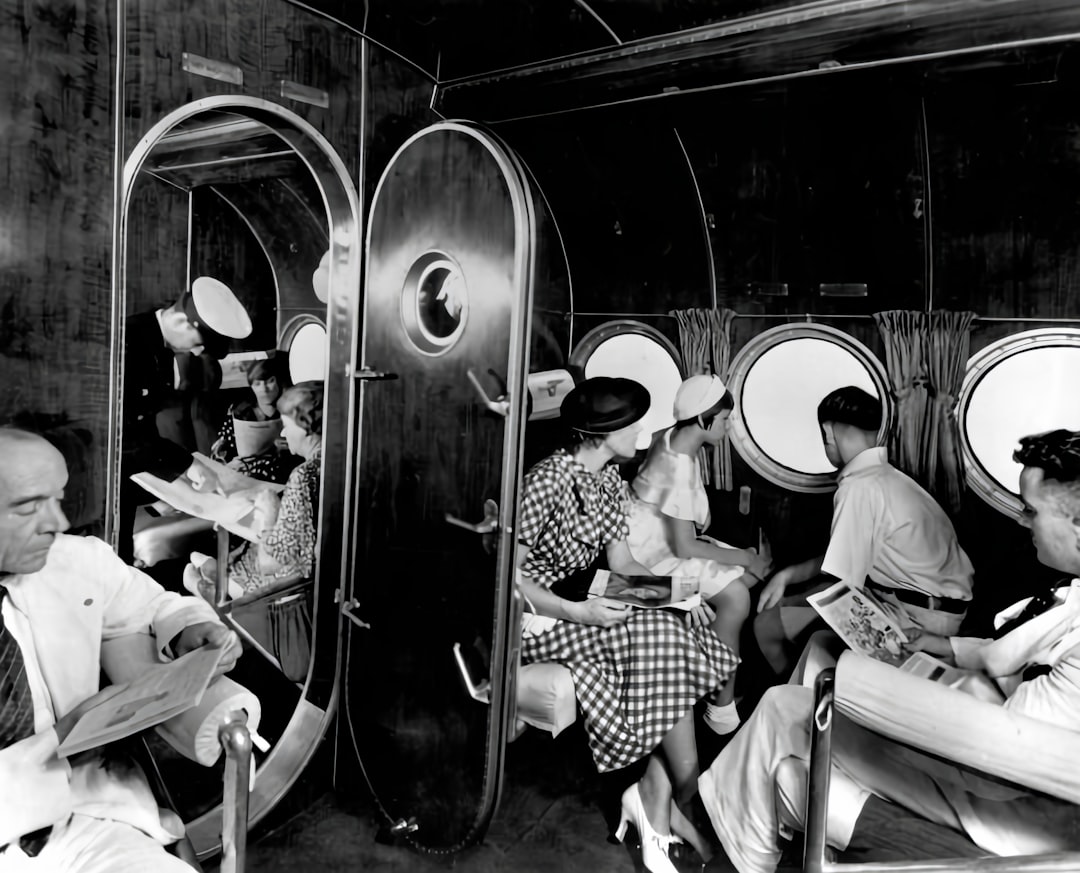
The progression of human work and leisure across the past two centuries reveals a complex narrative that contradicts the utopian vision of technology liberating humanity from toil. While technological revolutions have promised progressively greater freedom from labor, the actual relationship between innovation and free time has proven far more intricate. Understanding this trajectory—from the manual economies of the early nineteenth century through the industrial transformation, the digital revolution, and into our current artificial intelligence era—provides crucial insight into how societies can genuinely advance toward lives where humans flourish as humans, not merely as economic units.
The Pre-Industrial Baseline: Surprising Leisure
Contrary to popular assumption, the period before industrialization was not one of ceaseless toil, at least not in the way we imagine. Medieval and early modern peasants worked considerably less than the narrative of perpetual drudgery suggests. Research into historical work patterns reveals that peasants worked approximately 150 to 175 days per year, translating to roughly 1,440 to 2,100 hours annually. Work was intermittent—interrupted by customary breakfast, lunch, afternoon naps, and dinner breaks that were considered laborers' traditional rights, even during peak harvest seasons. The work itself, while physically demanding, operated at a leisurely pace compared to what industrialization would impose.
Artisans enjoyed even shorter documented workdays, averaging around 8 to 9 hours, with considerable flexibility in their schedules. Importantly, when wages rose—particularly during the high-wage period of fourteenth-century England—workers exercised a choice known in economics as the "backward-bending supply curve of labor." They simply worked fewer days to maintain their customary income, reducing their annual labor to roughly 120 days. This suggests pre-industrial workers possessed both time and autonomy that would become foreign during the subsequent centuries.
However, this apparent leisure carries a critical caveat: it belonged primarily to the elite. Peasants and laborers, despite their seasonal free time, lacked the resources to enjoy meaningful entertainment or leisure activities as the aristocracy understood them. The top elite—the true beneficiaries of pre-industrial leisure—could devote themselves entirely to entertainment, intellectual pursuits, arts, and philosophical life. For the masses, free time was rest, not enrichment.
The Industrial Revolution: The Catastrophe of Time
The Industrial Revolution of the late eighteenth and nineteenth centuries fundamentally inverted the relationship between humans and work. Factory owners, driven by the imperative to maximize returns on expensive machinery, viewed idle equipment as lost profit. Workers faced shifts of 12 to 16 hours daily, six days a week, totaling 72 to 96 hours per week. By 1819, the reality for factory workers averaged 14 to 15 total hours worked (72 to 74 per week of actual labor), with much of it occurring in conditions that would horrify modern sensibilities.
The pace of industrial work differed fundamentally from agricultural and artisanal labor. Work was continuous, synchronized with machine rhythms, relentless. Workers could not pause for rest or meals at will; the machines dictated tempo. The tempo was exhausting; after 12 hours of synchronized toil, workers were already depleted yet forced to continue. When we account for walking to and from factories, the boundary between work and life effectively dissolved.
Children were conscripted into this system. A nine-year-old child of a factory operative, undernourished and poorly clothed, would work 6.5 hours daily until age thirteen, then twelve hours until eighteen. The factories were damp and heavy, the air laden with toxins, the pace unforgiving.
Yet the Industrial Revolution also inadvertently created the conditions for its own correction. The sheer exploitation and suffering generated resistance. Robert Owen, an enlightened factory owner, demonstrated in the 1810s that workers could be productive on reduced schedules. He instituted a ten-hour day and later coined the aspirational slogan that would animate labor movements for a century: "Eight hours' labour, Eight hours' recreation, Eight hours' rest." By the 1830s, workers in Philadelphia and Boston were striking for the ten-hour day. British stonemasons in Sydney, benefiting from labor scarcity caused by gold rushes, achieved the eight-hour day through strike action in 1855.
The transformation was gradual. The Factories Act of 1819 limited children's work to twelve hours per day. The Ten Hours Act of 1847 established ten-hour days for women. Government factory inspectors were appointed to enforce these new regulations. By 1920, the standard had shifted to eight hours per day, five days per week. Yet even this achievement represented a hard-won victory, extracted from reluctant employers only through organized labor action and legislative intervention.
By the early twentieth century, after more than a century of struggle, annual working hours had declined from the 3,000+ hour baseline of 1870, though progress varied by country. Germany would eventually reduce annual hours by nearly 60% from 1870 to 2017 (3,284 to 1,354 hours), while the UK achieved a 40% reduction. The Industrial Revolution, in its cruelty, had motivated the systematic reduction of working hours.
The Digital Revolution: Automation Without Liberation
The twentieth century witnessed an entirely different technological revolution—one focused on automating cognitive and information work rather than just physical production. The proliferation of computers, telecommunications, and the internet promised a different sort of liberation. Rather than shortening working hours through regulation, these technologies would make work so efficient that natural reduction would follow.
The digital revolution did enable efficiencies that contributed to further reductions in annual working hours in many developed economies. Between 1950 and 2017, the long-term decline in working hours continued, though patterns diverged by country. Countries like Germany maintained steep declines, while others like the United States saw the trend level off in recent decades.
However, the digital revolution also introduced a more insidious dynamic: the blurring of boundaries between work and life. Digital technologies made possible what seemed beneficial—remote work, flexible scheduling, constant connectivity—but in practice created new forms of entrapment. When an employee could theoretically work from anywhere at any time, employers' expectations expanded. The boundaries between professional and personal time collapsed. Most empirical studies reveal that despite the popularity of flexible work arrangements, telework tends to associate with longer total work hours, not shorter ones.
Additionally, the digital revolution created a peculiar labor market bifurcation. While some workers benefited from higher productivity and better opportunities, others faced displacement of routine cognitive work—the hollowing-out of the middle class that characterized late twentieth-century economics. Computer automation displaced clerks, processors, and routine administrative workers, while creating demand for highly skilled technicians and for low-wage service workers. The broad middle ground—the comfortable, stable employment of the industrial era—eroded.
The digital era also introduced new forms of monitoring and control. Electronic surveillance systems, AI-driven performance metrics, and algorithmic management emerged as tools to enforce productivity standards not just on factory floors but in white-collar environments. These technologies could track keystrokes, monitor websites visited, measure output in real-time. Rather than freeing workers, such systems intensified work pressure.
The Current AI Era: The Paradox of Productivity
We arrive now at the artificial intelligence revolution, where the pattern takes an unexpected turn. One might assume that artificial intelligence—capable of learning, reasoning, and performing complex tasks autonomously—would finally deliver the liberation that earlier technologies promised. Instead, contemporary evidence reveals a troubling paradox.
Workers in occupations with high exposure to artificial intelligence have not experienced reduced working hours. Quite the opposite: they work longer. Research analyzing workers from 2004 to 2023 found that higher AI exposure corresponds to longer work weeks and reduced leisure time. An increase from the 25th to 75th percentile in AI exposure corresponds to an additional 2.2 hours of work per week. Following the release of ChatGPT—a natural experiment introducing generative AI to occupations unprepared for it—workers in highly exposed occupations worked approximately 3.15 hours more per week.
Why does automation increase work hours rather than decrease them? The mechanism is subtle but powerful. When AI increases a worker's productivity—allowing them to accomplish more per hour—it makes each hour of work more valuable. This changes incentive structures in two ways. First, employers expect more output, capitalizing on the productivity gains. Second, workers, seeing their hourly value increase, choose to work longer hours to capture higher wages rather than maintain their previous income with fewer hours. Wage increases have followed AI adoption in some sectors, suggesting firms are sharing some productivity gains, but workers have converted those gains into additional earnings rather than additional leisure.
This pattern persists even when we account for selection effects and job characteristics. Among AI-exposed occupations with high surveillance capabilities—customer service representatives, stockers, dispatchers, truck drivers—workers experienced longer hours even after returning to offices post-pandemic, confirming that AI monitoring and management intensity drives longer hours, not shorter ones. The self-employed, notably, did not show this pattern, indicating the effect stems from employer-employee dynamics, not the inherent nature of AI-heavy work.
The consequences extend beyond hours themselves. When work hours expand, what contracts? Screen-based leisure—passive consumption like watching television and playing video games—remains stable. Instead, active, participatory leisure suffers: entertainment, socializing, and personal pursuits that require genuine engagement and presence. Workers trade human connection and creative engagement for more work and isolated downtime. The psychological toll of this substitution extends beyond simple hour-counting.
The Keynes Question: What Happened to the Prediction?
In 1930, at the height of optimism about technological progress, economist John Maynard Keynes made a celebrated prediction. He estimated that by 2030, people would work only 15 hours per week, spending the remainder of their time on meaningful pursuits, creativity, relationships, and pleasure. The prediction rested on reasonable assumptions about compounding productivity gains eventually creating such abundance that scarce labor time would become unnecessary.
The prediction has not materialized. People in developed economies do not work 15 hours per week; they work roughly 35-40 hours, with significant variation by country and sector. What actually occurred was more complex. Lifetime hours of leisure and non-market work in the United Kingdom rose by 58 to 60 percent between 1931 and 2011—substantially more than Keynes anticipated. However, this increase came almost entirely from extended retirement, not from reduced working years. Longer life expectancy at older ages and longer retirement periods account for the leisure increase. But the work years themselves compressed less than Keynes imagined.
Why? Keynes underestimated several structural factors. The transition to retirement requires accumulated savings, which necessitates earning income during working years. Without universal basic income or comprehensive wealth redistribution, workers cannot simply work 15 hours weekly and maintain retirement security. Additionally, consumerism expanded alongside productivity, creating new wants that required income to satisfy. The hedonic treadmill—the human tendency to adapt to improvements and recalibrate expectations upward—meant that productivity gains often fueled consumption rather than leisure.
The Structural Barriers to Leisure in the AI Era
Understanding why artificial intelligence and automation have not, and likely will not, spontaneously generate mass leisure requires examining the structural barriers that persist even as technology removes obstacles.
First, the problem of income and inequality. Automation threatens to displace workers faster than new jobs emerge in some sectors, particularly low-skill work. Some estimates suggest 85 million jobs may be displaced by shifts in human-machine labor division by 2025. Yet job displacement and job creation have not kept pace smoothly. When low-skilled workers lose employment to automation, retraining for high-skilled technical roles demands resources and time many lack. Increased leisure time becomes a luxury available only to the well-employed or the unemployed—a nightmarish reversal of the utopian vision. The risk is that automation concentrates leisure among the already privileged while imposing precarity on the displaced.
Second, the cultural valuation of work. Humans derive identity, meaning, and social status from work. Even when survival does not require extensive labor, psychological needs persist. The prospect of mass enforced leisure generates anxiety about meaning and identity. "What happens to people whose sense of identity, dignity, and income is tied to their jobs?" becomes a central question. Without addressing the meaning-making function of work, reducing hours confronts not just economic barriers but existential ones.
Third, the principal-agent dynamics of employment. As demonstrated by AI surveillance studies, employers retain power to set expectations and enforce effort regardless of technology's efficiency. Unless policy actively constrains working hours—as labor movements achieved during industrialization—employers will continue extracting maximum value from workers. The autonomy to choose leisure does not exist when employment remains precarious and alternative income sources unavailable.
Fourth, the assumption of technological inevitability. Technology does not automatically determine social outcomes. How societies choose to distribute the benefits and burdens of automation remains a policy question, not a technical one. The difference between an AI-enabled world of mass unemployment and desperation versus mass leisure and flourishing depends on choices about taxation, redistribution, labor regulation, and education—not on the AI itself.
The Path Forward: Toward Genuine Human Flourishing
The historical pattern offers a crucial lesson: technological progress alone has never spontaneously liberated humanity from excessive toil. Liberation required organized demand, political movements, legislative change, and enforcement. The eight-hour day was not a gift of industrial machinery; it was extracted through decades of strikes, suffering, and coordinated action. Regulatory structures had to be built; inspection systems established; penalties enforced.
The AI era requires a similar deliberate approach. If we wish to progress toward a world where humans live as humans—enjoying life, relationships, creativity, contemplation, and leisure—rather than merely as economic producers, several structural changes become necessary.
First, labor policy must adapt proactively. Rather than waiting for unemployment crises to force action, governments should establish maximum working hours—perhaps the four-day workweek or reduced-hour standards—as AI adoption accelerates. Such policies have historical precedent and demonstrable benefits: earlier research suggested that shorter working hours increase worker productivity per hour and reduce fatigue-related errors. Germany's steeper decline in working hours compared to the US might reflect partly differences in labor regulation and worker organization, suggesting policy matters.
Second, education and skill development must democratize access to high-skill work. If automation will displace routine and low-skill jobs preferentially, workers must have genuine opportunity to retrain and transition. This requires not just technical education but subsidized access, income support during transitions, and realistic assessment of job market capacity to absorb displaced workers.
Third, economic systems must address inequality frontally. Automation can generate vast wealth for society. How that wealth distributes—concentrated among capital owners or broadly shared—determines whether leisure becomes a universal benefit or a luxury good. Universal basic income, reduced working hours with maintained income, progressive taxation, or other redistributive mechanisms become not luxuries but necessities for equitable transitions.
Fourth, we must reconceptualize the meaning of work and leisure. If humans are to thrive with less time devoted to wage labor, societies must invest in infrastructure for meaning-making: arts, culture, community, family, spirituality, education, and civic participation. The reduction of working hours should be accompanied by expansion of opportunities for human flourishing beyond economic production.
Fifth, resistance to the notion of "complete automation" must remain vigilant. Some experts predict near-total job replacement by AI and robots, with humans freed entirely from work. While this vision can inspire hope, the transition would be catastrophic without prior structural reorganization. A smoother path involves selective, managed automation that increases leisure gradually while maintaining employment, income, and purpose for those in transition.
Conclusion: The Arc of History Is Not Automatic
The two-hundred-year trajectory from pre-industrial work patterns through industrialization, digitalization, and into the AI era reveals that technological progress and human liberation are not synonymous. The Industrial Revolution initially intensified suffering, not alleviated it. Digital technology promised efficiency but often delivered surveillance and boundary-blurring. Artificial intelligence, despite its capacity to automate vast domains, currently correlates with longer working hours and reduced leisure.
Yet the history also demonstrates that change is possible. Labor movements, political organizing, legislative action, and coordinated demands transformed the brutal 16-hour factory day into the 8-hour workday standard. That victory was neither inevitable nor automatic; it was achieved through struggle and organization.
The promise of the AI era—that increasing percentages of humanity could live as humans, enjoying their lives rather than laboring ceaselessly—remains achievable. But achievement requires intentional choice: policy design, regulatory frameworks, wealth redistribution, and cultural reinvention of what meaningful human life entails. Technology creates possibility; human decision creates reality.
The question before this generation is not whether artificial intelligence could liberate humanity from excessive toil—it clearly could. The question is whether societies will make that choice deliberate, equitable, and universal, or whether they will allow the benefits to concentrate while imposing the costs on the vulnerable. History suggests that without organized demand and political commitment, technological capability transforms into deeper entrenchment of existing inequalities.
The path from servitude to genuine leisure is neither inevitable nor automatic. But it remains possible, if we choose it.







0 Comments