

In the age of YouTube University and TikTok tutorials, the default mode of learning has shifted rapidly from text to video. But is this shift making us smarter, or just more entertained?
When you strip away personal preference and look at the cognitive mechanics, the answer isn't a simple "better" or "worse"—it is a trade-off between information density and cognitive ease.
Here is what the research says about how your brain processes a page versus a pixel.
1. Speed and Information Density: Text Wins
If your goal is to acquire the maximum amount of raw information in the minimum amount of time, reading is statistically superior.
- The Speed Gap: The average adult reads at 250–300 words per minute (wpm). In contrast, the average speaking rate in an educational video is 150–160 wpm. Even if you watch a video at 2x speed (300 wpm), you are merely catching up to the baseline speed of a competent reader.
- Skim-ability: Text allows for non-linear processing. You can scan a 5,000-word article in seconds to find a specific keyword, jump to the conclusion, or re-read a complex sentence immediately. Video is linear; finding a specific piece of information requires "seeking" (scrubbing through the timeline), which is imprecise and time-consuming.
- Density: A script for a 5-minute video often fits on less than one page of text. A 20-minute video lecture might contain the same amount of actual data as a 5-minute read.
2. Cognitive Load and Comprehension
Learning "efficiency" isn't just about speed; it's about how hard your brain has to work to hold onto the information.
Reading (Low Extraneous Load, High Germane Load):
Reading is self-paced. If you encounter a difficult concept, you naturally slow down or stop to think. This reduces "cognitive overload." You are the driver, controlling the flow of information to match your processing speed. This generally leads to better retention of abstract or complex concepts (like philosophy, coding syntax, or math).
Video (High Extraneous Load, Low Barrier to Entry):
Video is transient. The information flows past you whether you’ve understood it or not. To keep up, your brain must constantly process visual and auditory signals simultaneously. If the video moves too fast, you get lost; if it moves too slow, you zone out.
- The "Illusion of Competence": Research suggests video watchers often feel they have learned more than they actually have. The ease of watching creates a false sense of mastery, whereas the effort required to read provides a more realistic gauge of your understanding.
3. The "Retention Rate" Myth
You have likely seen the famous "Cone of Learning" statistic claiming we remember 10% of what we read but 95% of what we watch/do.
This is a myth.
Educational researchers have repeatedly debunked these specific numbers (often attributed to Edgar Dale, though he never used them). There is no scientific evidence that video inherently creates better memory than text.
The Real Driver of Retention:
Retention is not determined by the medium (text vs. video), but by activity.
- Passive Video: Watching a lecture while scrolling your phone = Low Retention.
- Active Reading: Reading a chapter and summarizing it in your own words = High Retention.
- Active Video: Pausing a tutorial to practice the step shown = High Retention.
4. When to Use Which?
Efficiency depends on the subject matter.
📚 Reading is Best For:
- Abstract Concepts: Topics like Philosophy, Law, and complex Theory, where language precision is paramount.
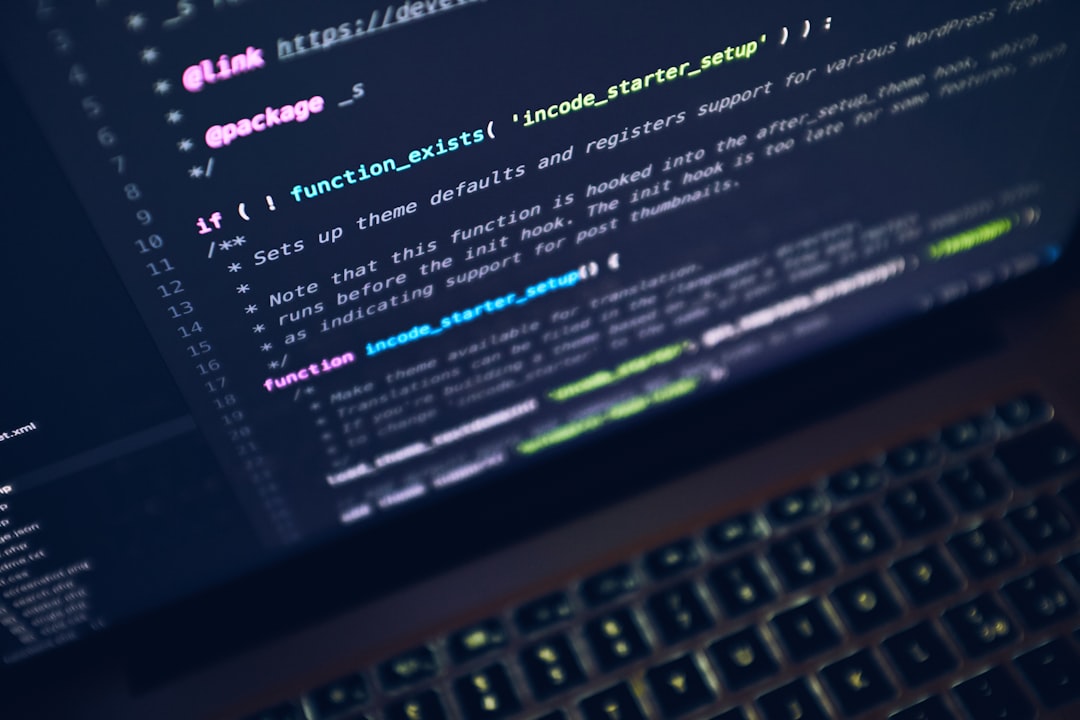
- Code & Syntax: Learning Programming languages, specific Math formulas ($E=mc^2$), or detailed specifications.
- Review & Reference: When you need to find one specific fact quickly or repeatedly refer back to a source.
▶️ Video is Best For:
- Procedural Skills: Tasks like Cooking, Surgery demonstrations, Sports techniques, or DIY repairs that require visual modeling.
- Visual/Spatial Topics: Fields such as Geography, Art History, or Anatomy, where seeing the physical relationship between objects is critical.
- Motivation: When you are too tired to read but need an engaging, low-effort introduction to a topic.
5. The Verdict: The "Hybrid" Approach
Research on Dual Coding Theory suggests that combining verbal and visual information helps the brain create stronger memory traces. The most efficient learners do not choose one side; they use them in a specific sequence:
- Watch for Context (The Primer): Watch a short video to get the "big picture" and emotional context. This primes your brain and reduces the friction of starting.
- Read for Depth (The Mastery): Switch to text (textbook, documentation, article) to fill in the gaps, learn the vocabulary, and control the pace of the hard concepts.
- Active Recall (The Glue): Close both the book and the video, and try to write down what you learned.
Summary
- Reading is faster and better for deep focus, reviewing, and complex abstract ideas.
- Video is superior for step-by-step procedures, emotional engagement, and overcoming procrastination.
Efficiency Tip: Don't replace reading with video. Use video as a preview to make your reading faster.




0 Comments