
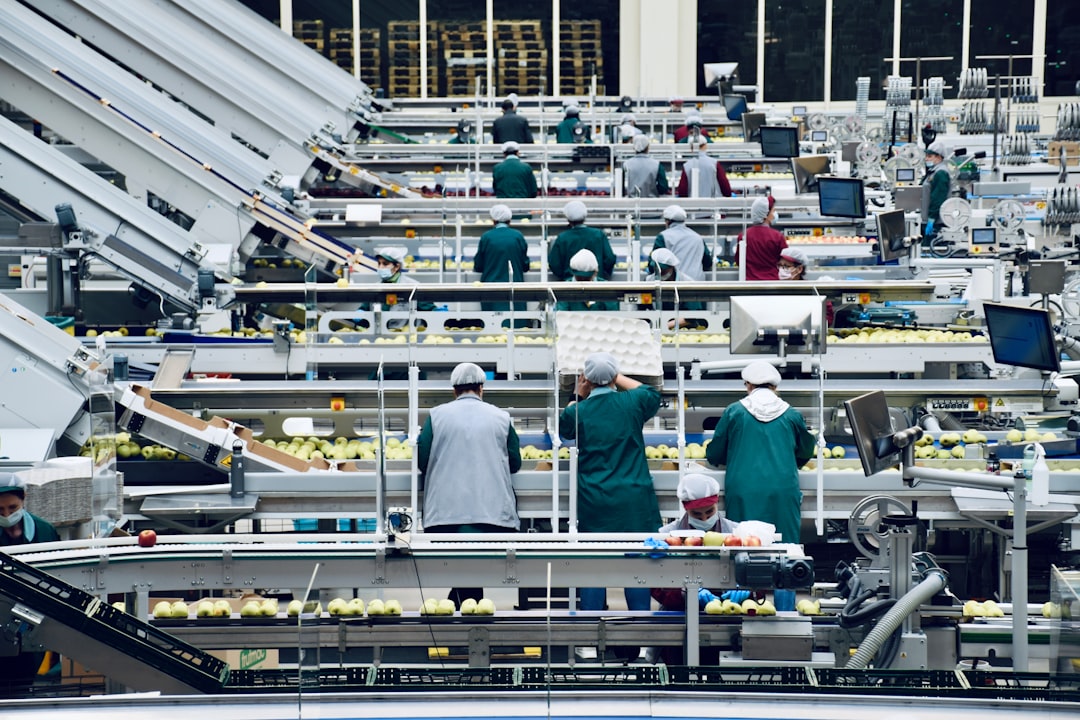
Short answer: estimates vary by method, but using task-based measures we find two consistent signals:
(1) a relatively small share of jobs are classified as high-risk routine jobs (single-digit to low-teens percent in many OECD analyses), while
(2) a much larger share of work hours or tasks — often measured as the portion of time spent on repeatable, automatable tasks — can be automated with current or near-term technology (estimates range around ~40–57% of work hours). That gap matters: much routine work is concentrated in tasks inside jobs (not entire jobs), so AI and automation will reshape task mixes inside roles rather than simply “replace” whole occupations.
1) What researchers mean by “routine” — and why measurement matters
“Routine” is a task-level concept. Economists separate work into tasks (e.g., data entry, inspection, creative problem solving, interpersonal negotiation). A job becomes “routine-intensive” when many of its tasks are repetitive, rule-based, and require little on-the-fly adaptation. Different studies measure routine in different ways:
- Job-level risk: some studies classify whole occupations as “at risk” if many of their tasks are routine. These estimates tend to show a smaller share of jobs at high risk (because many occupations mix routine and non-routine tasks).
- Task or hour-level automatability: other analyses evaluate each task or hour of work against capabilities of current technologies and estimate the share of work hours that could be automated. These estimates are larger because they count every automatable minute inside mixed jobs.
Because of that definitional difference, you’ll see two different “percentages” in the literature — both are valid but answer different questions.
2) Snapshot of current estimates (what the evidence says now)
A. Share of jobs classed “at risk” (job-level)
- Classic OECD and related analyses using task-based approaches often find single-digit to low-teens percent of jobs are at high risk of full automation. For example, the influential OECD/Arntz-et-al. style work (task-based reanalysis) finds the share of jobs at high risk is around 9% on average across OECD countries — lower than early, occupation-level claims. This is because many occupations include non-routine tasks that remain hard to automate.
B. Share of work hours / tasks that are automatable today (hour-level)
- Technology-centered analyses that map present capabilities to tasks find a much higher share of work hours could be automated today. Recent large industry analyses put this number around 40–57% of work hours, depending on country and method. One major recent estimate suggests about 57% of U.S. work hours are, in principle, automatable with technologies that exist or are demonstrated today — though that’s a theoretical ceiling, not an immediate forecast of job losses.
C. Directional trends
- Across developed countries, the routine share of occupations has declined over recent decades while non-routine cognitive tasks have grown — but the task mix inside jobs continues to change rapidly as software and AI automate information processing and repetitive cognitive tasks.
3) Why the two numbers differ — and why that matters
- Jobs vs tasks: most occupations are bundles of tasks. Even when a job contains automatable routine tasks (e.g., spreadsheet maintenance, basic reporting), the job as a whole may not disappear because it also contains judgment, relationship-building, or on-the-spot problem solving that machines can’t fully replicate yet.
- Technical feasibility ≠ adoption: a task being automatable is not the same as being automated. Firms must invest, redesign workflows, manage change, and address regulatory or customer concerns. Successful adoption often requires rethinking processes so humans and machines complement each other.
4) How this will change in the near future (next 5–15 years)
Several forces determine the trajectory:
A. Technology improvements (especially generative AI and advanced robotics)
- Generative AI and advanced automation are expanding what counts as “routine”: tasks that used to require human language understanding (summaries, first-draft reports, routine coding) are increasingly automatable. Estimates suggest AI + existing tech could raise productivity growth substantially if deployed well. McKinsey projects material productivity gains from generative AI when combined with other technologies.
B. Business redesign and workflow change
- The largest effect won’t always be outright replacement. Instead, firms will redesign jobs: automation takes over routine subtasks, freeing workers to focus on higher-value tasks (interpretation, negotiation, creative problem solving). But redesign requires investment in reskilling, process mapping, and governance — and many firms lag in that work.
C. Policy, regulation, and social choices
- Speed and distribution of change will be shaped by labor policy, safety and liability rules (especially for AI), and public investment in retraining. Countries with robust retraining systems and active labor-market policies will likely manage transitions more smoothly.
Net result (plausible scenario):
- Over the next decade, expect a significant shift of routine task-hours to automation (the 40–60% theoretical ceiling will convert into a smaller but still large share actually automated), while full job displacement remains concentrated in roles that are extremely routine-intensive or easily re-engineered. Many workers will see their roles change rather than vanish.
5) Implications for workers and firms
For workers
- Task shifts, not always job loss: many will move away from repetitive tasks toward oversight, interpretation, relationship work, and hybrid roles.
- Reskilling becomes central: employers will need to train staff in skills that complement AI (prompting, oversight, domain judgment, ethical use). WEF surveys show businesses expect massive reskilling needs.
- Wage effects will be mixed: routine tasks’ decline can depress wages for some profiles while increasing pay for workers who combine domain expertise with AI fluency.
For businesses (efficiency and strategy)
- Potential productivity boost: automation of routine work can free time for higher-value activities, raising output per worker if firms redesign workflows appropriately. McKinsey and others estimate meaningful GDP/productivity upside from generative AI adoption
- Adoption costs and failure risk: many AI pilots fail to deliver if deployed without process change, worker involvement, and measurement of real outcomes. Successful firms treat AI adoption as organizational change, not just tool purchase.
6) Practical recommendations — for workers, businesses, and policymakers
For workers
- Focus on complementary skills: creativity, complex problem solving, social intelligence, data interpretation, and “AI-operating” skills (prompting, quality control, domain framing).
- Learn task design & process mapping: being able to decompose your job into tasks and think which parts could be automated is a marketable skill.
- Stay adaptable: expect more frequent micro-reskilling (short courses, on-the-job learning).
For businesses
- Map tasks before buying tools: do a task audit to identify where automation will yield the biggest net gains when combined with human oversight.
- Design human-AI workflows: reassign routine tasks to automation and redesign roles so humans handle exceptions, interpretation, and value creation.
- Invest in retraining and change management: include workers early, measure outcomes, and adjust incentives to reflect new workflows.
For policymakers / ecosystem builders
- Scale lifelong learning: subsidize short-cycle reskilling, micro-credentials, and employer-led training.
- Support transition pathways: portable benefits, job search assistance, and wage insurance for displaced workers where necessary.
- Govern AI deployment: safety, transparency, and liability frameworks that reduce misuse while enabling beneficial adoption.
7) How to read the percentages responsibly
- Don’t treat the “57%” or “9%” as a prophecy. They answer different questions (hours vs. whole jobs) and are conditional on methodology and assumptions. The important takeaway is structural: a large share of routine task-hours is automatable today, and that will reshape many jobs; but full occupational disappearance is more limited and depends on how firms and societies manage the transition.
8) Sources I used (key papers & reports)
- McKinsey Global Institute — analyses on automation potential and generative AI economic potential (estimates of ~57% of work hours automatable in some analyses; productivity upside from generative AI).
- World Economic Forum — Future of Jobs Report (discusses task changes, reskilling needs, and employer expectations).
- OECD / task-based measures — routine intensity measures and long-run trends on routine content of jobs.
- Arntz, Gregory & Zierahn / OECD-style reanalyses — task-based approaches showing lower shares of whole jobs at high automation risk (e.g., ~9% average).
- Recent BLS and academic task-and-productivity papers discussing how task mixes relate to establishment productivity.
Final takeaway (for a busy reader)
A relatively small share of entire occupations is likely to be fully automated in the near term, but a much larger share of the tasks people do — in many occupations — is automatable now. That means the future will be defined largely by how firms redesign work and reskill people, not by a single wave of mass job destruction. Smart businesses and workers that focus on redesigning workflows and acquiring complementary skills stand to capture big efficiency gains; those that don’t will face disruption.







0 Comments